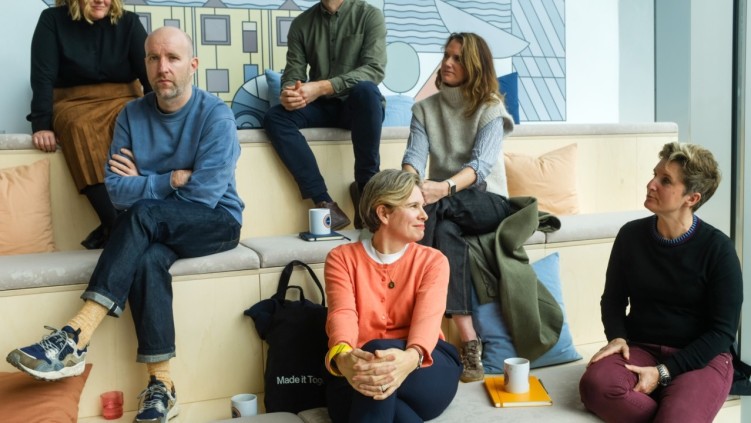
On Wednesday I joined the Patn discussion on “Why do Masterplans fail?” – it was a brilliant discussion with some great built environment people, most of who I’ve gotten to know well over the last 10 years so a very honest conversation was had! Masterplanning, the development of long term frameworks for the development of a site, neighbourhood or an organisation exist almost everywhere when we get into the ribs of our urban spaces. The group decided that they don’t fail but are simply part of the development process, allowing visions to be realised and adapted over time.
But, it’s funny, that even though I write food blueprints for places, for organisations, for sites (buildings and land) and for the organisations that service them, I’ve not really thought as them as ‘Masterplans’ when increasingly they are. In the past, I have written Food Strategies for places commissioned by Local Authorities and County Councils they consider elements based on the food system, in simple terms, on food production and consumption. They are often public health led, with a need to help people consume healthier diets. But they never end there. What and how people eat has never been simple; it is complex, it’s messy and at times deeply challenging. Many places, such as those in #SustainableFoodPlaces, around 72 Places last time I checked, had a food partnership and some sort of mechanism like a strategy, policy, charter etc which they got behind to try to make sense of what their stakeholders want to see and activities that will be undertaken to achieve a vision. However, these strategies, to consider every aspect of the food system are huge, and the resources available to deliver them negligible in comparison. So, they are generally always in a difficult spot, I know, I’ve worked to deliver them. They also operate on a very different time frame. A food strategy typically focuses on 5 years not say 20 years of a Masterplan. That is nuts!
Over the years, I learned, through trying new things, where we need to get to. There is definitely something in the process of drafting them or refreshing existing plans. Then there is the governance to deliver these plan considering the system gatekeepers and the communities not to mention the producers (businesses and voluntary sector) which we need to bring along on the journey.
Food Masterplanning could be a really useful, tweaked approach to really try to realise a vision that goes beyond a passionate few. Is it time to refresh the vision and mission – really fix the scope of the work in a place? Is it time to get into the ribs of ‘integration‘ (land use, zoning, infrastructure etc.)? Then should we be shaping how we guide future development (pick a few things according to local need e.g. key regeneration projects, food procurement, events) so things improve providing strategic guidance as to how we do things. Then beyond a list of actions look at implementationmore specifically, the sequence of actions, funding, timing, resource allocation.
To do these things takes time and investment. Masterplanning is a detailed exercise, a long-established approach. We should perhaps not see Food Strategies as a stand alone document (they aren’t but they also are) but part of the Masterplanning process? This would begin to unpick long-standing blocks locally and provide regional intelligence supporting increased devolved action. Nationally, it is a more complicated picture. But I’ll leave that for another day!